

Accredited Social Health Activist (ASHA)
The Accredited Social Health Activist (ASHA) is a trained female community health volunteer serving as the first point of contact between the community and the public health system.
Home Based Care for Young Child (HBYC)
Home Based Care for Young Child (HBYC) is a joint initiative of the Ministry of Health and Family Welfare and the Ministry of Women and Child Development. The programme is implemented under the National Health Mission as an extension of the Home Based New Born Care (HBNC) programme. Under HBNC, ASHAs conduct home visits for newborns until the 42nd day after birth. However, a gap existed in household health system contact beyond this period. To address this gap, HBYC introduces additional home visits between the 3rd and 15th months of a child’s life.
National Programme for Health Care of the Elderly (NPHCE)
In countries with large populations, such as India, the number of elderly persons aged 60 years and above has grown substantially. As per estimates for 2022, India has nearly 149 million elderly persons, accounting for about 10.5 percent of the country’s total population. Within India, the State of Tamil Nadu stands out as one of the most rapidly ageing states, ranking second in the country as per the 2011 Census, with older persons constituting 13.7 percent of the total population. This increasing proportion of elderly individuals underscores the need for comprehensive policies and programmes to address their health, social, and economic well-being.
Tamil Nadu Cancer Care Mission
Initiatives are being undertaken statewide to raise awareness, strengthen community engagement through frontline health workers, and promote lifestyle risk reduction. Towards the elimination of cervical cancer, HPV vaccination is being rolled out for 14-year-old girls.
Tribal Health
Tamil Nadu has implemented a range of focused healthcare initiatives to improve access, reduce health inequities, and strengthen maternal, child, and community health outcomes among tribal populations living in remote, hilly, and hard-to-reach areas. These interventions include Birth Waiting Rooms, Tribal Referral Services, Tribal Bed Grant Scheme, Tribal Counsellors, Sickle Cell Anaemia Programme, Haemoglobinopathy Screening, Integrated Treatment Centres, and Tribal Mobile Medical Units.
Occupational Health Programme
In Tamil Nadu, the unorganized sector constitutes 93% of the total workforce (Census 2011). Workers are often exposed to occupational hazards leading to diseases such as Silicosis, Asbestosis, Hearing Loss, Dermatitis, and Spondylosis.
Since many occupational diseases are irreversible, the programme emphasizes early screening, prevention, and timely intervention.
Metabolic Dysfunction–Associated Steatotic Liver Disease (MASLD)
Metabolic Dysfunction–Associated Steatotic Liver Disease (MASLD) is increasingly associated with metabolic risk factors such as obesity, diabetes mellitus, hypertension, and dyslipidemia, and can progress silently to advanced liver disease if not identified early. As per the Global Burden of Disease (GBD) Study 2023, the prevalence of Metabolic Dysfunction-Associated Steatotic Liver Disease (MASLD) in India is 12.74%, while Tamil Nadu records a notably higher prevalence of ,16.09%, highlighting the greater burden of this condition in the State. Since the condition is often asymptomatic in its initial stages, early screening and risk stratification are essential for timely intervention and management.
Diabetic Nephropathy/ Siruneeragam Kaapom Thittam
Chronic Kidney Disease (CKD) is caused by uncontrolled Hypertension and Diabetes. According to the GBD Study 2023, the prevalence of Chronic Kidney Disease attributable to Type 2 Diabetes Mellitus is 2.47% in Tamil Nadu compared to 1.93% Nationally, highlighting the higher burden of Diabetic Nephropathy in the State. Since CKD often remains asymptomatic in its early stages, early detection through routine screening is therefore critical to enable timely intervention, prevent disease progression, reduce complications, and improve long-term health outcomes.
Retinopathy
Diabetic Retinopathy is one of the leading causes of preventable blindness among adults of working age and poses a significant Public Health challenge. The SMART India Study (Lancet Global Health, 2022) estimates the National prevalence of Diabetic Retinopathy at 12.5% and vision-threatening Diabetic Retinopathy (VTDR) at 4.0% among the Diabetic population, with approximately 3 million people aged 40 years and above having VTDR in India. As the condition often remains asymptomatic until advanced stages, early screening and timely intervention are critical to prevent vision loss and preserving quality of life.
Universal Health Coverage (UHC)
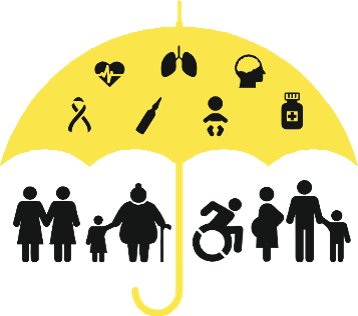
The aim of Universal Health Coverage (UHC) is to ensure that all individuals have access to comprehensive, essential and quality health services including prevention, promotion, treatment, rehabilitation and palliative care without facing financial hardship. In Tamil Nadu, the UHC programme is implemented under the initiative “Anaivarukkum Nalavazhvu Thittam”.