

Prevention & Awareness
Initiatives are being undertaken statewide to raise awareness, strengthen community engagement through frontline health workers, and promote lifestyle risk reduction. Towards the elimination of cervical cancer, HPV vaccination is being rolled out for 14-year-old girls.
Social and Behaviour Change Communication (SBCC)
- Raising public awareness on cancer prevention and the importance of timely screening.
- IEC materials on common cancers disseminated widely
- Lifestyle modification counselling
- Adoption of SBCC strategies developed by experts from Johns Hopkins University in collaboration with State Officials.
Human Papillomavirus (HPV) Vaccination Programme
- HPV Vaccination Programme for 14 year old girl children for the elimination of cervical cancer
- The programme was launched on 27.01.2026 as a pilot in Ariyalur, Perambalur, Tiruvannamalai, and Dharmapuri districts, with phased statewide expansion planned based on the outcomes of the pilot.
- A single dose of HPV vaccine is being provided free of cost to 14-year-old girls studying in Government and Government-aided schools.
- Also available at government healthcare facilities from PHCs.
Early Detection & Screening
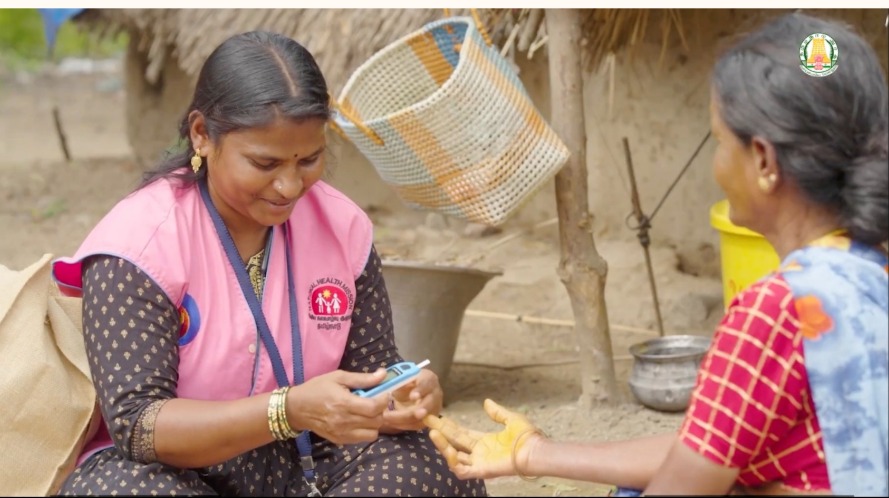
Oral Cancer Screening: Offered to men and women aged 18 and above. Breast & Cervical Cancer screening Offered once every three years for women aged 30 and above.
Institutional Level Screening and follow up
- Health facility–based opportunistic screening for cervical and breast cancers was piloted during 2007–2010 in two districts and scaled up statewide in 2012.
- Opportunistic screening services are being provided in all Government health facilities across 2,286 Primary Health Centers, 299 Government Hospitals, and 36 Medical College Hospitals.
Community-Level Screening and Follow-up
- Population-based, doorstep screening gained momentum during the COVID-19 pandemic and led to the conceptualization of Makkalai Thedi Maruthuvam (MTM), the State’s flagship programme
- Women Health Volunteers counsel and motivate individuals to cancer screening at nearby PHCs and Government Hospitals.
Organized Cancer Screening (OCS)
Aim :
To ensure that, among the common cancers taken up for screening, at least 75% of those detected are captured at an early stage (stage 1 and stage 2) thereby facilitating early and appropriate intervention to achieve cure or to improve the quality of lifeObjectives:
- To improve screening coverage for common cancers at the community level
- To ensure effective follow-up of individuals who turn positive during screening including appropriate treatment through protocol-based systematic intervention approaches.
- To strengthen population-based cancer registry
Strategies
Organized Cancer Screeningk
Comprehensive Healthcare Framework for Early Detection of cancer.
Comprehensive Healthcare Framework
- Early detection of Cancer through organized screening.
Defined Target Population
- Men and Women aged 18 years and above.
- Line-listed beneficiaries for systematic screening.
Decentralized Services
- Health & Wellness Centres (HWC-HSCs).
- Camps in hard-to-reach areas.
- Engagement of Private Hospitals and NGOs.
Mapping of Services
- Every village mapped street-wise to the nearest screening facility.
- Every screening facility linked with referral centres.
Robust Follow-Up Mechanism
- Portal-based data capture.
- Strengthened diagnostic and treatment services.
- MTM Clinics as referral contact points.
- State and District Cancer Control Rooms.
| Pilot Districts | Phase I Districts | Phase II Districts | Phase III Districts |
|---|---|---|---|
| 1. Erode | 1. Coimbatore | 1. Ariyalur | 1. Mayiladuthurai |
| 2. Kanniyakumari | 2. Dharmapuri | 2. Chennai | 2. Chengalpattu |
| 3. Ranipet | 3. Kancheepuram | 3. Cuddalore | 3. Dindigul |
| 4. Tirupathur | 4. Karur | 4. Nagapattinam | 4. Kallakurichi |
| 5. Madurai | 5. Perambalur | 5. Krishnagiri | |
| 6. Thanjavur | 6. Salem | 6. Namakkal | |
| 7. Theni | 7. Thoothukudi | 7. Pudukkottai | |
| 8. Tiruchirappalli | 8. Ramanathapuram | ||
| 9. Thiruvarur | 9. Sivagangai | ||
| 10. Tiruppur | 10. Tenkasi | ||
| 11. Tiruvallur | 11. The Nilgiris | ||
| 12. Vellore | 12. Tirunelveli | ||
| 13. Tiruvannamalai | |||
| 14. Villupuram | |||
| 15. Virudhunagar |
Early Detection Of Colorectal Cancer
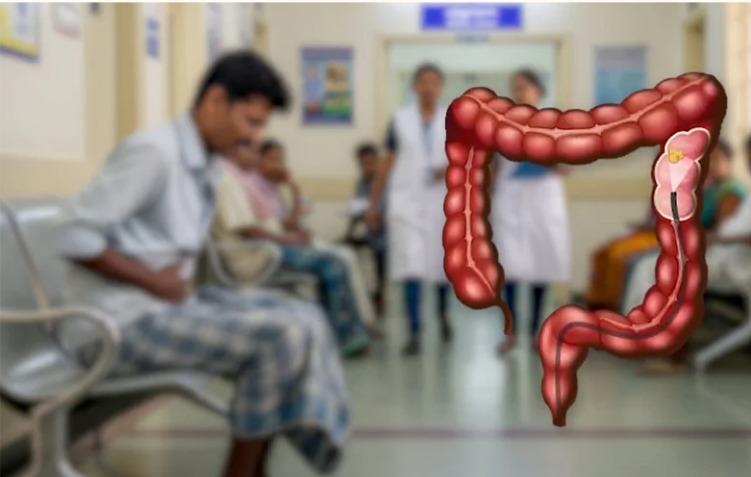
Colorectal cancer is a high-incidence cancer in Tamil Nadu. Under a JICA- supported initiative,early detection strategies are being piloted to improve cure rates throughtimely intervention.
Screening for Colorectal Cancer
- Colorectal cancer (CRC) is rapidly increasing in India and shows the highest growth rate among cancers
- It is the 4th most common cancer in men and 5th in women in both India and Tamil Nadu, with higher incidence in South India.
- In Tamil Nadu (2018), the crude incidence rate per lakh population was 5.4 in men and 3.8 in women.
- CRC has high 5-year survival when detected early, making screening crucial.
- CRC screening is piloted in Coimbatore, selected due to its high incidence (second after Chennai) and strong medical infrastructure at Coimbatore Medical College.
Objective
To strengthen the early diagnosis of colorectal cancer (CRC) among the patients with CRC related signs and symptoms through.- Development of a standardized CRC protocol and referral mechanism
- (Capacity building of primary and secondary level medical practitioners to identify the patients with signs and symptoms suspicious of CRC
- Promotion of public awareness on CRC through IEC activities
Early detection of Lung Cancer through AI-Based Interpretation of Chest X-Rays
- Pilot ongoing in 3 Institutions
- 60,000 X-rays to be interpreted
- To be upscaled to interpret Chest X-rays in all institutions.
Strengthening Diagnostics
Advanced Diagnostic Services for Comprehensive Cancer Care - Across Tamil Nadu
Strengthening Diagnostics for Cancer Care :
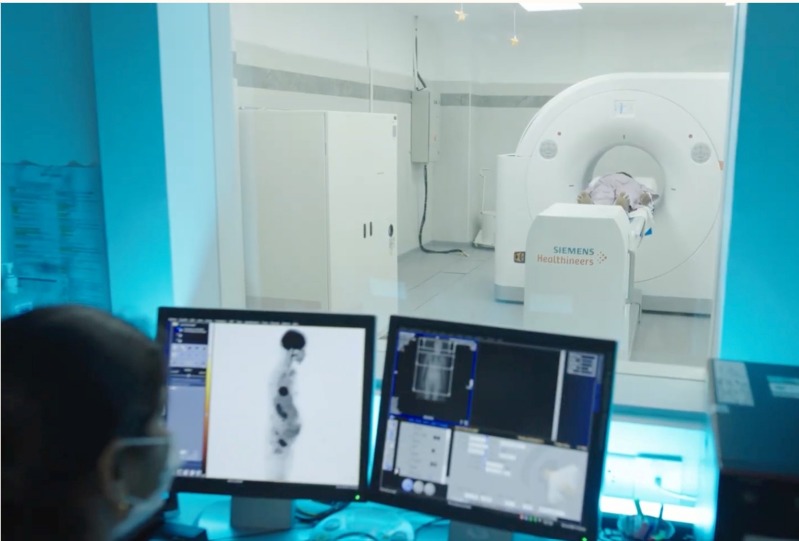
- All Medical Colleges are equipped with essential diagnostic facilities for cancer confirmation, including mammography, colposcopy, digital X-ray, CT, MRI, and histopathology services
- Colposcopy units have been provided to all District Headquarters Hospitals (DHQHs) and Taluk Hospitals, while mammogram units are available in major Government hospitals.
- All DHQHs are equipped with CT and MRI facilities.
- Molecular diagnostic services are operational in three centres—two in Chennai and one in Madurai.
- PET scan facilities are available in seven Government centres, with four additional centres under establishment.
- Major diagnostic services are available under the Chief Minister’s Comprehensive Health Insurance Scheme (CMCHIS), including access to empanelled private health institutions
Comprehensive Cancer Treatment
- State of Art Exclusive Cancer center-Government Arignar Anna Memorial Cancer Hospital and Research Centre.
- Five Regional Cancer Centres.
- Medical College Hospitals providing advanced Cancer care.
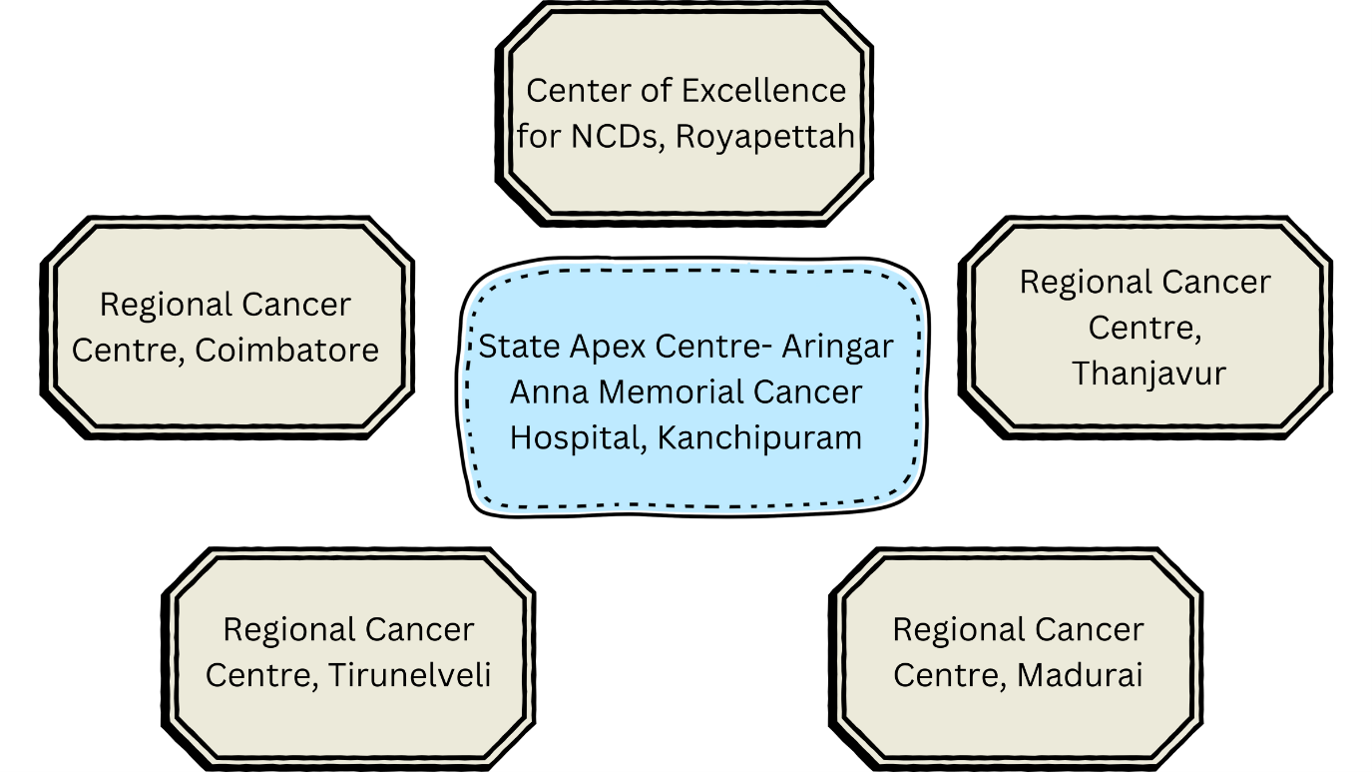
The Tertiary Cancer Centres providing cancer management services are structured as detailed below;
State Apex Centre
Karapettai, Kanchipuram
5 Regional Cancer Care Centres
11 Tertiary Cancer Care Centres
38 Day Care Chemotherapy Centres
18 District Health Quarters Hospitals
-
Arignar Anna State Cancer Hospital and Research Institute at Karapettai, Kanchipuram which acts as the Apex centre for cancer care in Tamil Nadu.
Five Regional Cancer Hospitals and Research Centres at Govt Royapettah Hospital, Coimbatore Medical College Hospital, Thanjavur Medical College Hospital, Madurai Medical College Hospital and Tirunelveli Medical College Hospital. These centres have a dedicated oncology unit with all three Oncology departments namely Radiation Oncology, Medical Oncology and Surgical Oncology.
-
Twelve Tertiary Care Cancer Centres at RGGGH-Chennai, TNMSSH-Chennai, Thoothukudi GMCH, Stanley GMCH, IOG-Egmore, Chennai, MKMGMCH-Salem, GMCH-Viluppuram, GMCH-Thiruvannamalai, GMCH-Pudukottai, GMCH-Dharmapuri, KAPVMCH-Trichy and GMCH-Kanyakumari. Each of these centers provides essential screening, diagnosis, and treatment services, with specialized care available at various levels of expertise. These centres have at least one Oncology department established for cancer care.
Digital Cancer Treatment
Virtual Tumour Boards operating on a Hub-and-Spoke model enable multidisciplinary expert guidance through tele-oncology.
Virtual Tumour Board (VTB)
The Virtual Tumour Board initiative strengthens Tamil Nadu’s cancer care network by connecting hospitals across the state and ensuring that every cancer patient benefits from expert, multidisciplinary medical guidance, regardless of where they seek treatment. Under this system:- Hospitals with fully functional Tumour Boards act as Mentor Institutions
- Other tertiary care institutions are linked to them through virtual consultation.
- Cancer cases are discussed online, enabling expert opinions and treatment guidance without requiring patients to travel.
How the Virtual Tumour Board Works
- Doctors from linked hospitals can present cancer cases through secure virtual platforms.
- Expert specialists review medical records, imaging and pathology reports.
- Treatment recommendations are provided collaboratively.
- This system supports timely diagnosis, appropriate referrals and improved treatment outcomes.
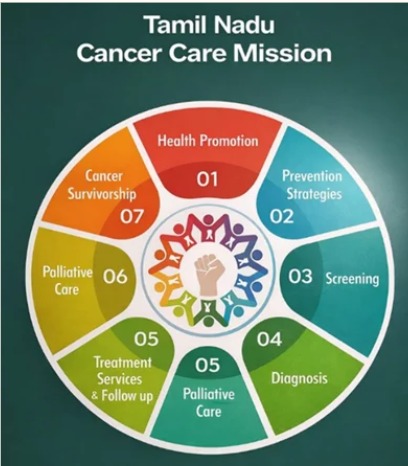
Our Vision
Across care continuum "Prevention to Palliation"
🎯 Aim
To create an inclusive and patient-centric Cancer Care Pathway that is comprehensive, equitable and culturally acceptable by utilizing innovative research, technology and community involvement.
🏆 Goal
Reduction in premature mortality from cancers by one-third by 2030.
Objectives
🛡 Prevention of Cancer
- 25% reduction in incidence of preventable cancers by 2050.
🔍 Early Detection of Cancers
- 75% of people with cancer will be diagnosed at Stage I or II by 2035.
⚖ Elimination of Inequities
- Equitable access to prevention, screening, treatment and survivorship care by 2030.
Strategies Included under the Mission
Strategies for Preventable Cancers
- Focusing on Modifiable Risk Factors – Social and Behaviour Change Communication (SBCC).
- Elimination of cancers with infectious etiology through Vaccination.
- Check on irrational Radiation exposure for diagnostic purposes.
- Minimizing occupational exposure to carcinogens.
- Protection of Health Care Staff from exposure to carcinogens.
Strengthening Screening & Early Diagnosis
- Addressing the continued burden of Breast, Cervical and Oral cancers.
- Strengthening early identification of Paediatric cancer.
- Addressing Lung, Colorectal, Ovarian, Stomach and Endometrial (Uterus) cancers.
Strengthening Diagnostics toward Cancer Care
- Revamping Pathological Services.
- Increased Access to Radiological Services.
- Establishment of Diagnostic and Therapeutic Nuclear Medicine Services.
Delivering Cutting-edge High-quality Treatment
Four-Tier System for Maximum Utilization of Existing Resources
- State Apex Centre.
- 5 Regional Cancer Centres.
- 11 Tertiary Cancer Care Centres.
- 28 District Cancer Care Centres.
Improving Quality of Life
- Better Palliative Care Network.
- Implementation of Cancer Survivorship Programme.
Cross-cutting Activities
- Capacity Building Activities.
- Effective Fund Pooling for Cancer Care.
- Data Management and Research.