Family Welfare Services
Introduction
The National Family Welfare Programme has been implemented in Tamil Nadu since 1956. The programme is aimed at raising the standard of living, improving Maternal and Child Health, and thereby stabilizing population growth.
Tamil Nadu follows the Community Needs Assessment Approach for implementing Family Welfare and Maternal & Child Health programmes under RMNCH+A Servicesensuring that services are need-based, equitable, and community-centred.
Objectives of the Family Welfare Programme
The Family Welfare Programme is intended to:
- Provide comprehensive maternal and child health care
- Reduce birth rate and maternal and infant mortality
- Avoid higher order births (third birth and above)
- Prevent female foeticide and female infanticide
- Promote informed choice and responsible parenthood
- Ensure gender equity and women’s empowerment
Demographic Scenario of Tamil Nadu (2024 – SRS)
| Indicator | Value |
|---|---|
| Crude Birth Rate | 11.6 per 1,000 population |
| Crude Death Rate | 6.8 per 1,000 population |
| Infant Mortality Rate (IMR) | 11.0 per 1,000 live births |
| Maternal Mortality Ratio (MMR) | 25 per 1,00,000 live births |
| Natural Growth Rate | 4.8 |
| Total Fertility Rate (TFR) | 1.3 |
Source: Sample Registration System (SRS)
Alignment with Sustainable Development Goals
I. SDG 3 – Good Health and Well-being
Ensure healthy lives and promote well-being for all at all ages
India and Tamil Nadu have made significant progress in health indicators:
- Maternal Mortality Ratio reduced from 111 (2004–06) to 25 (2023–24)
- Infant Mortality Rate reduced from 57 (2005–06) to 11.0 (2024)
The strategy focuses on universal access to essential services, with special emphasis on poor and vulnerable populations.
II. SDG 5 – Gender Equality
Achieve gender equality and empower all women and girls
SDG 5.6 – Family Planning Indicators
Goals and Targets (by 2030)
- Contraceptive Prevalence Rate (CPR): 70%
- Unmet Need for Family Planning: NIL
Present Status (NFHS-6):
| Indicator | Goal (2030) | Tamil Nadu | India |
|---|---|---|---|
| CPR | 70% | 65.1% | 52.7% |
| Unmet Need | Zero | 6.4% | 8.5% |
Strengthening Service Delivery Points
- Community based platform for PPIUCD and Postpartum Family planning counselling
- Client centred counselling through RMNCH counsellors
- Quality, safe and client convenient sterilization Fixed Day Static Services
- Training to service providers on CAC services: MTP, Minilap, MMA, IUCD, Injectable contraceptive.
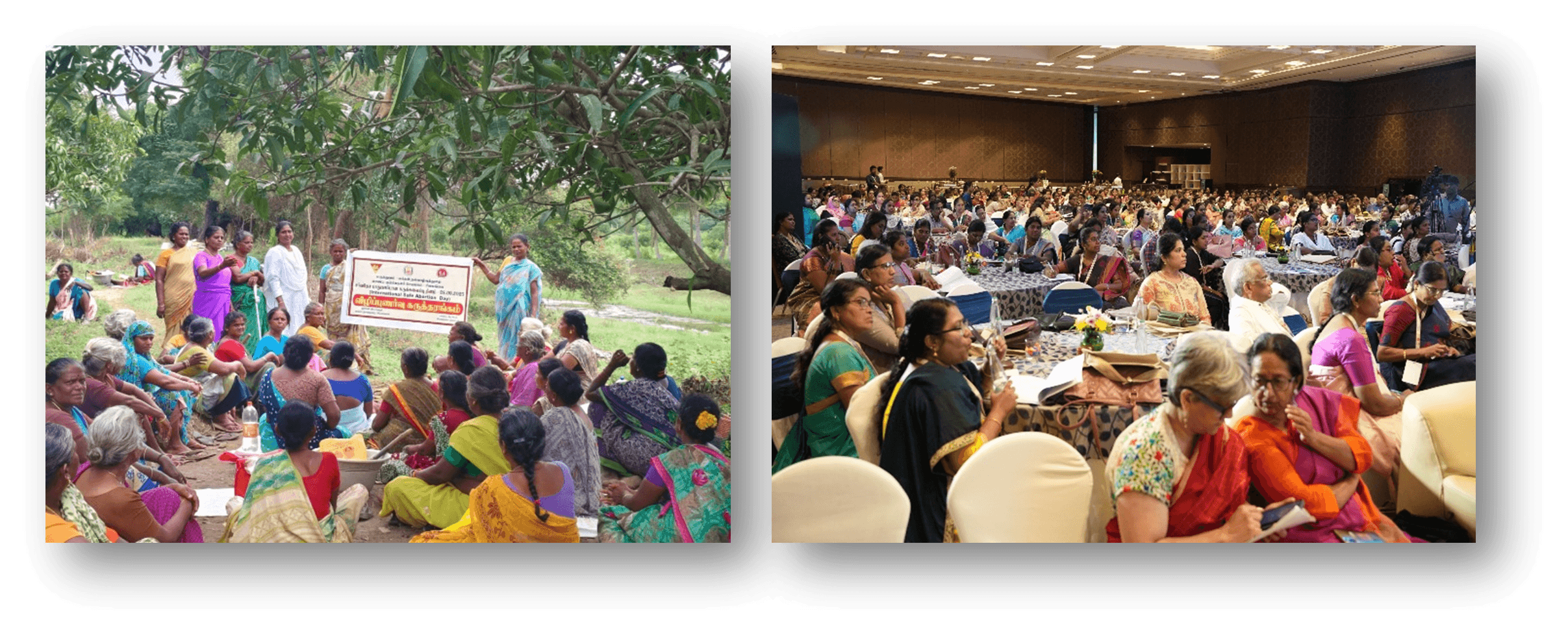
- World Population Day and Vasectomy Fortnight to promote Family Planning Services.
- Competency Workshop on management of POCSO cases.